
Overview of Battery Issues
Jeep Grand Cherokee 4xe (PHEV) models, particularly 2022–2026, have faced significant issues with their high-voltage (HV) lithium-ion battery packs (supplied by Samsung SDI, ~17.3 kWh, 400V system). The primary defect involves separator damage in battery cells and several fires have been reported along with vehicle malfunction. The separator is intended to isolate positive and negative electrodes; when damaged, it can lead to internal short circuits, thermal events (fires), voltage instability, cell balancing problems, reduced charging capability, and "Service Charging System" warnings.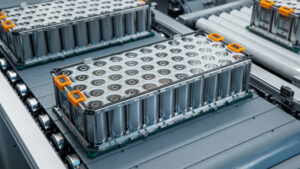
Common symptoms reported by owners and documented in Technical Service Bulletins (TSBs) and NHTSA filings include:
- Malfunction Indicator Lamp (MIL) illumination.
- Diagnostic Trouble Codes (DTCs) such as P0B24-00 (Hybrid/EV Battery "A" Voltage Unstable), P0BBE-00 (Hybrid Battery Pack Voltage Variation), P1C5E-00 (Battery State of Health Failed), P0DAB-00 (Hybrid/EV Cell Balancing Performance), and related codes.
- Charging inhibition, reduced electric range, power loss while driving, and in severe cases, battery fires (while parked or driving).
Additional related issues include 12V auxiliary battery drain and software glitches in the Battery Pack Control Module (BPCM) or Hybrid Control Processor (HCP) that can cause propulsion loss.
Prevalence of the Problem
The issues are not isolated. Stellantis (FCA US) has issued multiple safety recalls affecting tens of thousands of Grand Cherokee 4xe vehicles in the US alone:

- NHTSA Recall 25V-741 (Nov. 2025): ~91,844 Grand Cherokee 4xe (2022–2026) as part of a larger ~320,065-vehicle campaign (including Wrangler 4xe). Production dates roughly July 2021–Oct/Nov 2025. Estimated ~5% of affected vehicles have the defective cells.
- Earlier recalls (e.g., 24V-720) covered subsets (~35k Grand Cherokee initially) and involved software updates that proved ineffective.
As of late 2025, Stellantis reported ~19 fires linked to the HV battery (including some in vehicles that received prior remedies), with at least one injury noted. There are also hundreds of field reports, customer assistance records, and warranty claims related to battery/hybrid system problems.
Owner complaints (via NHTSA, forums, and legal filings) frequently describe recurring failures shortly after delivery, rendering the plug-in hybrid functionality unreliable and creating safety concerns. Some vehicles experience multiple repair attempts under warranty without resolution.
Problems with the Jeep Battery Recall
The recalls have been criticized for their ineffectiveness. Stellantis has primarily relied on software updates rather than replacing the defective battery packs, which has not fully resolved the issue. Owners have been advised not to charge their vehicles or use them in electric mode, effectively negating the primary purpose of owning a plug-in hybrid vehicle. This has caused significant inconvenience and economic harm to consumers, including diminished resale values and ongoing loan payments for vehicles that cannot be used as intended. Recalls have evolved due to the ongoing nature of the defect:
- Initial responses involved BPCM software flashes (e.g., TSB 08-009-25) and inspections.
- Later remedies include HV battery pack replacement (under TSBs like 08-072-26) for vehicles showing specific DTCs, plus warranty extensions.
- Owners have been instructed to park outdoors away from structures/vehicles and avoid charging until fixed, as fire risk increases with higher state-of-charge. This severely impacts the vehicle's PHEV value proposition.
Legal Claims: Breach of Express/Implied Warranties
Jeep's new vehicle warranties (express warranties) typically cover defects in materials/workmanship for the HV battery and hybrid system for a set period/mileage. Failures like separator damage or persistent DTCs/charging issues can constitute breach of express warranty if repairs fail to resolve the problem after reasonable attempts.
The Implied warranty of merchantability (under the UCC) requires vehicles to be fit for ordinary use. A PHEV prone to fires, power loss, or non-functional electric mode arguably breaches this, especially given safety recalls.
The Magnuson-Moss Warranty Act (federal law, 15 U.S.C. § 2301 et seq.) strengthens consumer protections:
- Prohibits deceptive warranty practices and ties into written warranties.
- Allows consumers to sue manufacturers/dealers in state or federal court for breach of warranty (express or implied, where applicable).
- Successful plaintiffs can recover damages (e.g., repair/replacement costs, diminished value, incidental/consequential damages), plus reasonable attorney fees and costs—making it attractive for individual or class actions without upfront legal costs in many cases.
Class actions and lemon law claims (state-specific, often overlapping with Magnuson-Moss) have been filed or pursued for Jeep 4xe battery/hybrid defects, seeking buybacks, replacements, or refunds. Document all repairs, communications, and impacts. Consult a lemon law or consumer attorney, as many offer free consultations and work on contingency. State lemon laws may provide additional presumptions (e.g., 4+ repair attempts or 30+ days out of service).
Recommendations: Monitor NHTSA for updates, maintain detailed service records, and consider professional legal advice for persistent issues. These defects have materially affected vehicle safety, usability, and resale value for many owners, and compensation can be provided in many cases.
CALL FOR A FREE CONSULTATION (attorney cell 973 479-5515) on your Battery Defect Claim


Comments
There are no comments for this post. Be the first and Add your Comment below.
Leave a Comment