
Used Car Fraud & “As-Is” Dealer Misrepresentation (NJ / NY)
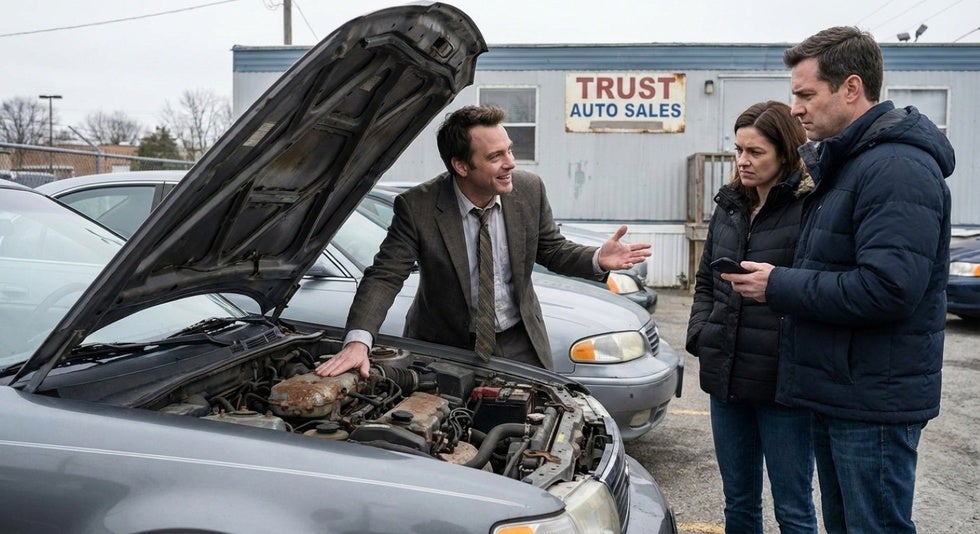
“As-is” paperwork does not automatically protect a dealer if the sale involved misrepresentation or concealment. We evaluate whether the facts and the economics support a real recovery.
Fast qualifiers (if these sound like you, keep reading):
-
You were told the car was inspected, problem-free, or reliable, but serious issues appeared immediately
-
You suspect facts were hidden (temporary fixes, cleared warnings, undisclosed history)
-
You discovered questionable fees or add-ons after the sale
-
The dealer refuses to fix it, refund it, or blames “as-is”
Case Reality Check (Free Call)
We'll tell you if it looks strong, weak, or borderline, and what the next sensible step is.
How to start: Submit the contact form with the basics (vehicle, date of purchase, what went wrong, and what you were told). We'll reach out by phone or email with the initial assessment. We do our best to respond within 1–2 business days. If we need more time to review what you sent, we'll send a quick update so you're not left wondering.

Does “As-Is” mean you have no case?
Usually, “as-is” limits warranty obligations. It can reduce what a dealer must fix for free as a warranty matter.
But “as-is” does not automatically excuse deception.
If a dealer (or salesperson) misrepresented key facts, concealed known problems, or sold the car using claims that don't match reality, the legal analysis changes. The real question is:
-
What was represented?
-
What was hidden or omitted?
-
What can be proven with documents, records, and timing?
This is where many buyers get misled twice: first by the sale, then by being told “as-is means you're stuck.” That's not always true.
The used-car fraud cases we're built for
We're selective on purpose. Not every bad car is a fraud case, and not every fraud case makes economic sense to fight.
Good fit (typically)
-
Clear contradiction between what was promised or advertised and what the paperwork, vehicle condition, or history actually shows.
-
Evidence of concealment or a known issue masked at the sale (or obvious signs it was known).
-
Meaningful damages where the outcome can make economic sense after fees and costs.
-
A cooperative client focused on a practical result (not a personal crusade).
Usually not a fit
-
Minor problems with no evidence of deception.
-
Pure buyer's remorse situations.
-
Cases where the net recovery likely won't justify the fight.
-
Revenge-driven expectations or “I want to destroy them” energy.
If your matter doesn't fit, we'll tell you early. That's part of the service.
Common used-car fraud patterns
Below are patterns we see again and again in NJ and NY. Different details, same playbook.
1) “Inspected / no issues” claim → major defect immediately after purchase
You're told it's solid. Then the first week brings a check engine light, overheating, stalling, or a transmission problem.
2) Cleared dashboard warnings or temporary fixes to pass a test drive
Warnings vanish right before sale. The car behaves long enough to get you to sign. Then the problem returns.
3) Undisclosed salvage or accident history
The listing implies a clean history, or you're told “never been hit.” Later you find structural damage, prior total loss, or repair work that doesn't match the story.
See also: Salvage
4) Odometer issues
Mileage inconsistencies, unexplained jumps, or history reports that don't line up.
See also: Odometer Fraud
5) Bait-and-switch financing, price, or add-ons
The advertised price changes in the office. The interest rate shifts. Add-ons appear late. Fees get padded.
See also: Bait-and-Switch
6) Misleading advertising claims
“Certified,” “clean Carfax,” “no accidents,” “perfect condition,” “one owner,” “factory warranty” - words that don't match reality.
See also: False Advertising in Vehicle Sales
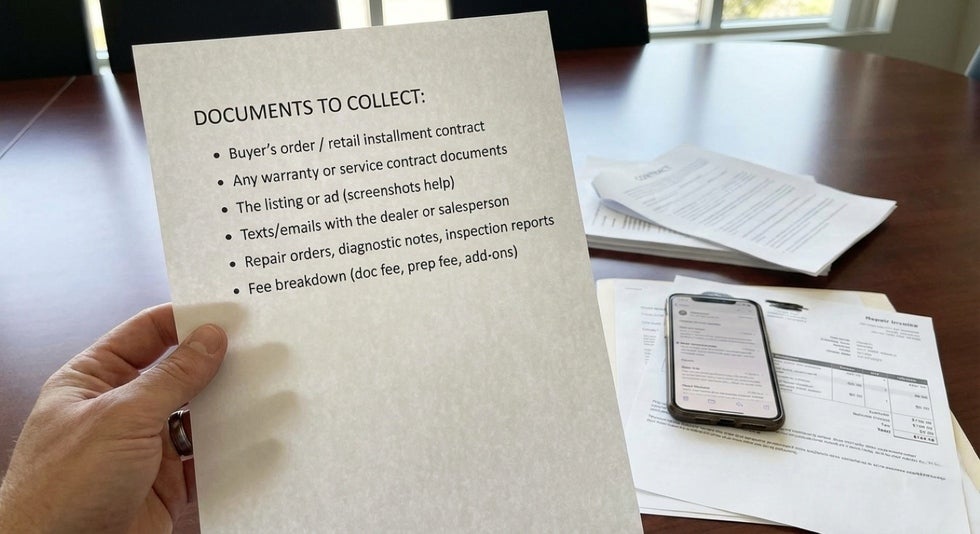
What to gather (even if incomplete)
If you're missing documents, don't let that stop you. Missing paperwork is common. Submit what you have.
Helpful items include:
-
Buyer's order / retail installment contract
-
Any warranty or service contract documents
-
The listing or ad (screenshots help)
-
Texts/emails with the dealer or salesperson
-
Repair orders, diagnostic notes, inspection reports
-
Fee breakdown (doc fee, prep fee, add-ons)
Small detail that matters: timing. A major defect showing up immediately after purchase often tells a story all by itself, especially if the sales claims were confident and specific.
How this typically works
No drama. No legal lecture. A practical sequence.
-
Case Reality Check (Free Call)
You explain the basics. We ask targeted questions. -
If viable: document review + theory of the case
We compare what you were told, what the paperwork says, what the vehicle history and repair records show, and what a realistic outcome could look like. -
Demand / negotiation / arbitration or litigation
The path depends on the contract (some have arbitration clauses) and the facts. The goal is movement toward a practical resolution, not a fight for the sake of fighting.

Fees
People avoid calling lawyers because they imagine an hourly nightmare. Here's the reality.
-
Many matters may be handled on a contingency-type (no win no fee) arrangement; some may not.
-
Arrangements vary by risk and facts and are confirmed in a written agreement.
-
No promises about outcomes.
While we handle many claims on a contingency basis, no guarantee is made of a particular result. We evaluate each claim individually, and arrangements may vary - these will be set forth in a written agreement. We are happy to discuss our procedures and welcome any questions you may have.
Start here
Case Reality Check (Free Call)
FAQ
I signed “as-is.” Should I still call?
If there's evidence of misrepresentation or concealment, “as-is” is not the end of the story. The faster you document what's happening, the better your position usually is.
What if the dealer says they never promised anything?
That's common. We look for proof in the real world: ads, texts, emails, timing of the breakdown, repair findings, and whether the paperwork conflicts with what you were told.
What if the contract requires arbitration?
Many auto sale contracts include arbitration language. That doesn't automatically kill a case. It changes the forum and strategy.
How fast should I act after discovering the problem?
As soon as you can. Waiting often makes evidence harder to gather and can tighten deadlines. Acting earlier usually gives you more options.
What results are realistic (refund vs. reimbursement vs. other outcomes)?
It depends on facts, proof, and economics. Possible outcomes can include unwinding the deal, reimbursement, repair-related recovery, or a settlement. We don't sell fantasy outcomes. We discuss what's realistic after we see what can be proven.
Do you take every case?
No. We accept matters where there is a realistic chance of a meaningful net recovery after fees and costs. If your case doesn't meet that standard, we'll tell you early.