
1. Basic Problems with the General Motors' L87 6.2-liter EcoTec3 V8 engine
The core issue with General Motors' L87 6.2-liter EcoTec3 V8 engine is premature connecting-rod bearing and crankshaft failure caused by supplier manufacturing and quality defects. These defects include sediment/contamination left on connecting rods and inside crankshaft oil galleries, plus out-of-specification crankshaft dimensions and surface finish.

Crankshaft and Rod Bearing Issues
In a properly functioning engine, the crankshaft rotates on a thin hydrodynamic film of pressurized oil that separates the hard steel journals from the softer bearing surfaces (typically a multi-layer aluminum or copper-lead alloy). Connecting rods transfer combustion forces from the pistons to the crankshaft; the rod bearings must maintain precise clearance so the oil film can support the load without metal-to-metal contact. Oil is pumped through drilled galleries in the crankshaft and rods to continuously replenish this film. When sediment blocks or partially obstructs oil passages, or when journal surface finish is too rough or dimensions are out of tolerance, the oil film collapses under load. Metal-to-metal contact produces heat, scuffing, and rapid wear. Bearings “spin” (rotate in their housings), clearances open further, oil pressure drops, and the connecting rod can break or the crankshaft can seize. The result is sudden loss of motive power—often at highway speeds—creating a serious safety risk of crash or stranding.
Teardowns (including those documented by independent shops) consistently show all eight rod bearings damaged, corresponding journal scoring, and, in advanced cases, block damage from a broken rod. GM originally specified 0W-20 oil for fuel-economy reasons; the thin oil provides less margin when clearances or surface finish deviate from specification.
A secondary but distinct problem on these engines is Dynamic Fuel Management (DFM) lifter collapse, which can produce ticking, misfires, and camshaft damage; however, the NHTSA investigation and primary recall center on the bottom-end bearing/crankshaft defect.
2. If more than one model vehicle is affected by the problem, list all models and years 2019 to 2026.
Affected models equipped with the L87 6.2L V8 (primarily 2021–2026 in the current Engineering Analysis, with earlier years appearing in prior probes and class actions):
- Chevrolet Silverado 1500 (2019–2026)
- Chevrolet Tahoe (2021–2026)
- Chevrolet Suburban (2021–2026)
- GMC Sierra 1500 (2019–2026)
- GMC Yukon / Yukon XL (2021–2026)
- Cadillac Escalade / Escalade ESV (2021–2026)
The NHTSA Engineering Analysis EA26005 opened August 20, 2026, covers approximately 997,743 vehicles of model years 2021–2026. The original safety recall 25V-274 focused on engines built March 1, 2021–May 31, 2024 (roughly 597,630 U.S. vehicles).
3. Typical complaints.
Owners report sudden engine knocking or growling from the lower end, fluctuating or low oil pressure, check-engine lights (including P0016), and abrupt loss of power while driving—sometimes while towing or at highway speeds. Many describe complete seizure requiring towing and engine replacement, sometimes more than once. On Reddit, posts appear frequently in r/Silverado, r/Justrolledintotheshop, r/gmc, and related truck communities. One widely circulated example (r/Justrolledintotheshop, February 2026) described a shop seeing multiple L87 failures in a single day, including engines that had already received the thicker-oil remedy and even brand-new replacement engines that failed shortly after installation. Mechanics noted spun bearings on all eight rods and questioned the effectiveness of the PicoScope inspection and 0W-40 change.
Similar firsthand accounts appear on gm-trucks.com forums and Facebook owner groups for Silverado, Sierra, Tahoe/Suburban, Yukon, and Escalade. Common themes include engines failing under 50,000 miles (sometimes under 5,000 or even at delivery), repeated failures after “fixed” engines, and frustration with dealer diagnostics that pass an engine only for it to fail later.
4. Recalls or service bulletins. Describe any service bulletins or recalls pertaining to the problem. If there have been any NHTSA investigations explain them.
- Recall 25V-274 (April 2025): Covered ~597,630 U.S. 2021–2024 vehicles with L87 engines built March 1, 2021–May 31, 2024. Root cause cited as supplier manufacturing defects (sediment on rods/crank galleries and out-of-spec crankshafts). Remedy: inspection; engines that pass receive an oil/filter change to higher-viscosity oil (typically 0W-40), new oil-fill cap, and a 10-year/150,000-mile extended warranty; engines that fail receive full replacement.
- Prior internal GM investigations were closed in 2022, 2023, and 2024.
- NHTSA PE25001 (opened January 2025, closed after the recall): Examined bearing failures on 2019–2024 models.
- RQ26001 (opened January 16, 2026): Recall Query focused on post-remedy failures.
- EA26005 (opened August 20, 2026): Full Engineering Analysis covering 997,743 vehicles (2021–2026). NHTSA has 499 complaints of post-remedy failure (473 after oil change, 26 after engine replacement) plus 191 failures outside the original production window. GM reported 6,953 post-remedy complaints (≈6,050 unique after de-duplication). At least one crash and one injury noted.
Service bulletins and TechLink articles (e.g., on crankshaft bearing conditions) have instructed dealers on diagnosis, oil-filter inspection for metal, and part restrictions on certain engine assemblies.
5. Class actions or litigation. If there is a class action provide the name and site. Explain what the class action and if the complaint is available, site sections of it.
The primary consolidated class action is Powell et al. v. General Motors, LLC, Case No. 4:25-cv-10479-SDK-KGA, pending in the U.S. District Court for the Eastern District of Michigan (Judge Shalina D. Kumar). Multiple individual suits filed in 2025 were consolidated; a 389-page Consolidated Class Action Complaint was filed February 26, 2026, on behalf of dozens of named plaintiffs and a putative nationwide class (with state subclasses).
Key allegations (from the consolidated complaint):
- The L87 suffers from a design/manufacturing defect causing loss of lubrication between crankshaft and bearings, leading to spun bearings, broken rods, sudden loss of propulsion, and increased crash risk.
- GM received more than 28,000 field complaints/incidents (including thousands involving loss of propulsion) before issuing the recall.
- The recall remedy is inadequate; post-remedy failures continue, and the switch to thicker oil reduces fuel economy while not curing the underlying defect.
- GM had pre-sale knowledge through internal testing, warranty data, prior investigations, NHTSA monitoring, and customer complaints, yet failed to disclose the defect.
GM has moved to dismiss, arguing (among other things) a low overall failure rate (claimed ≈3 %) and that the recall plus extended warranty already provide the relief sought. The case remains active as of mid-2026. Complaint documents are available via CourtListener/PACER.
6. Legal Claims, Getting Compensation or Other Relief

- Express warranty: GM's written limited warranties (typically 3/36 bumper-to-bumper and 5/60 powertrain for Chevrolet/GMC; longer for Cadillac) promise to repair defects in materials or workmanship. Proof requires showing the defect existed at sale or manifested within the warranty period, proper notice, and failure of the remedy to cure the problem (including repeated post-repair failures). The extended 10/150 warranty offered under the recall can also be invoked.
- Implied warranty of merchantability (UCC § 2-314 and state analogs): Vehicles must be fit for ordinary purposes (safe, reliable transportation). Sudden engine failure that strands the driver demonstrates unmerchantability. Proof focuses on the inherent defect, manifestation of failure, and that consumers could not reasonably discover it pre-purchase.
- Magnuson-Moss Warranty Act (15 U.S.C. §§ 2301 et seq.): Provides a federal cause of action for breach of written or implied warranties on consumer products. Successful claims can recover damages, costs, and attorney fees. Plaintiffs must show a written warranty, breach, and (in many circuits) an opportunity to cure that was refused or futile. The Act is frequently paired with state warranty claims in automotive defect cases.
- Deceptive/unfair practices (state consumer-protection statutes such as California CLRA/UCL, Illinois Consumer Fraud Act, etc.): Allegations center on material omissions—GM's knowledge of the defect and failure to disclose the risk of sudden failure and the limitations of the eventual remedy. Proof typically relies on internal documents, NHTSA data, the volume of pre-recall complaints, and marketing that emphasized reliability and performance.
Evidence commonly used includes NHTSA VOQs and investigation files, teardown reports, dealer service records showing repeated failures, expert metallurgical analysis of bearings/crankshafts, and GM's own Part 573 recall reports acknowledging the manufacturing defects.
7. Sources
- NHTSA ODI resumes for EA26005, RQ26001, PE25001 and Recall 25V-274 documents (static.nhtsa.gov).
- Autoblog, Reuters, The Drive, Car and Driver, Road & Track, AutoEvolution, Free Press, Motor1, The Autopian (August 2026 coverage of the expanded probe).
- CourtListener docket and complaint PDFs for Powell et al. v. General Motors.
- PickupTruckTalk and AA1Car technical analyses of bearing failures.
- YouTube: I Do Cars channel (“RECALLED GM L87 6.2L ENGINE TEARDOWN! Manufacturing Defect Causes INSANE Damage” and related L87 teardowns); Dave's Auto Center Escalade teardown videos; various shop videos documenting spun bearings and post-remedy failures.
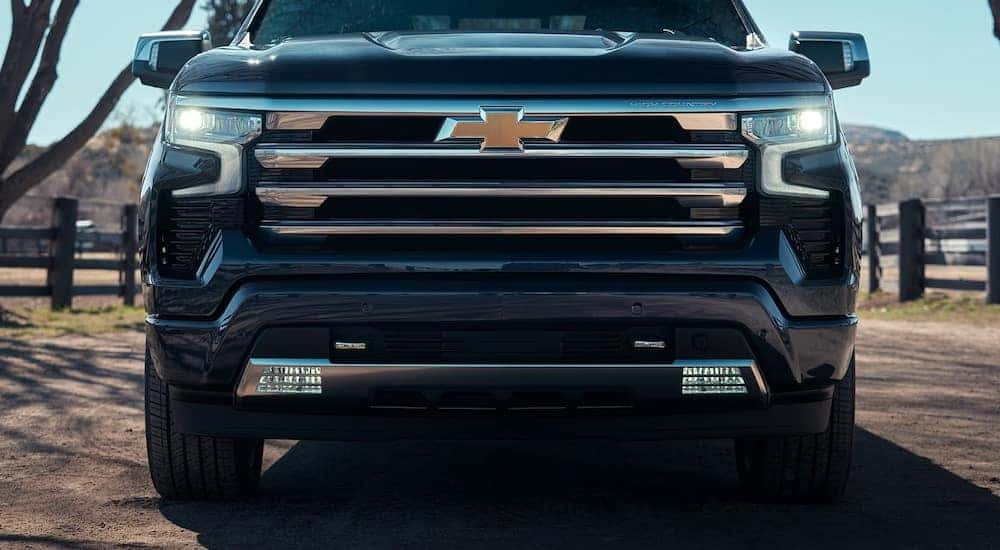
2024 Chevrolet Silverado 1500 High Country—one of the highest-volume models equipped with the L87.) The critical internal parts are the connecting-rod bearings and crankshaft journals. Independent teardowns show uniformly worn or spun bearings, scoring on the journals, and, in severe cases, broken rods and block damage. (Public domain or fair-use teardown images from mechanic channels illustrate the same failure pattern across multiple engines.)
9. Keywords GM L87 engine failure, 6.2 L87 problems, Silverado 6.2 engine seizure, L87 rod bearing failure, GM 6.2 recall 25V-274.
Long-tail: “L87 engine failed after oil change recall,” “Silverado 6.2 spun rod bearings,” “Escalade L87 sudden loss of power,” “GMC Yukon 6.2 engine replacement under warranty,” “NHTSA EA26005 L87,” “Powell v GM L87 class action,” “does 0W-40 fix L87 bearings,” “L87 engine failure under 30k miles.”
CALL FOR A FREE CONSULTATION TO DISCUSS YOUR RIGHTS. MOST CASES HANDLED ON CONTINGENCY WITH NO CLIENT PAYMENT REQUIRED.


Comments
There are no comments for this post. Be the first and Add your Comment below.
Leave a Comment