
Dealers say “as-is” like it ends the conversation.
Sometimes it does – for warranty-style complaints. But “as-is” is not a free pass to sell a car with a story that isn't true. The real issue is usually proof: what was represented, what was hidden, and what you can document.
If you want the full overview (case-fit, common patterns, evidence list, and process), start here:
Used Car Fraud & “As-Is” Dealer Misrepresentation (NJ/NY).
“As-Is” has one job: limit warranty obligations
In plain terms, “as-is” is designed to reduce the dealer's obligation to fix problems just because the car has problems.
That's why “as-is” is often effective against claims like:
- “It needs brakes”
- “The AC stopped working”
- “It's making a noise”
Those issues can be real (and expensive), but if there's no deception, “as-is” paperwork is often meant to keep them in the “buyer beware” lane.
Where dealers overreach: “As-is” does not automatically excuse deception
Consumer-protection laws generally target deceptive practices in selling and advertising. In New Jersey, the Consumer Fraud Act broadly prohibits deception, misrepresentation, and knowing concealment/omission of material facts in connection with the sale or advertisement of merchandise. New York also prohibits deceptive acts and practices in business.
Translation: warranty disclaimers and fraud are not the same category.
The practical “as-is” question becomes:
- Did the dealer merely refuse to warranty a used car?
- Or did the dealer sell the car using claims that don't match reality, or hide something material to get you to sign?
The 4 documents dealers lean on when they say “as-is”
If you understand these, you understand the fight.
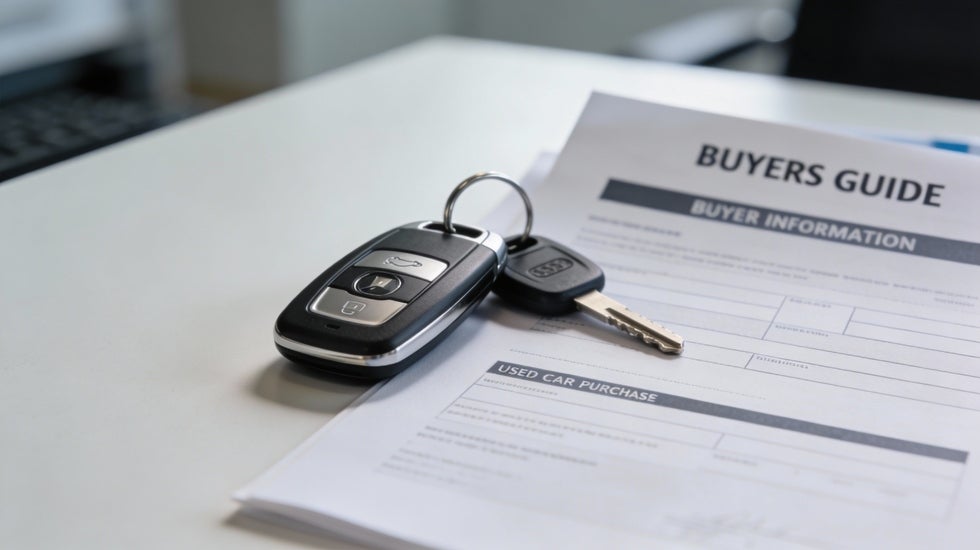
1) The FTC “Buyers Guide” window form
Dealers are generally required to display a Buyers Guide on used vehicles, showing whether the car is sold “as is” or with a warranty (and whether a service contract is available).
What it's good for (dealer): showing the warranty status.
What it doesn't prove: that nothing deceptive happened.
2) The purchase contract disclaimers
Often includes “no warranties,” “entire agreement,” and sometimes “no reliance” language.
What it's good for (dealer): making verbal disputes harder.
What it doesn't erase: ads, texts, emails, or concrete claims that can be documented.
3) The “We Owe / Due Bill / Addendum” paperwork
Sometimes the only written promises are here (repairs owed, items included, conditions).
What it's good for (buyer): a clean written commitment.
What it's bad for (buyer): when it's blank and everything was “just trust me.”
4) The “as-is” speech itself
“You drove it, you bought it, it's your problem.”
What matters: whether that speech contradicts what happened before you signed.

The proof trap: puffery vs. specific claims
Many “as-is” disputes die because the buyer can't prove the dealer made a specific, factual representation.
Here's the difference:
Usually not enough by itself (too vague):
- “Great car”
- “Runs fine”
- “Good condition for its age”
More likely to matter (specific, provable):
- “Inspected – no issues”
- “No check engine light / no codes”
- “New transmission”
- “No accidents / clean title”
- “One owner”
- “Never used as a rental”
- “Brakes and tires are new”
A practical rule: the more measurable the claim, the more it belongs in writing.
“He said / she said” is avoidable (and this is the point of this post)
If you're still in the shopping phase, you can reduce risk fast:
- If the salesperson says “inspected,” ask: “Can you text me the inspection checklist or repair order?”
- If they say “no accidents,” ask: “Can you email me the history report you're relying on?”
- If they say “no lights,” ask: “Can you confirm that in a text?”
You're not being difficult. You're doing one thing: creating a record.
If you already bought the car, the concept still applies (shift every conversation to something that leaves a trail):
- “Please confirm your position in writing”
- “Please confirm what you represented at the time of sale”
- “Please confirm whether you will repair, unwind, or deny”
Short. Calm. Documented.
When “as-is” still leaves room for a real case
You're usually in stronger territory when the story looks like this:
- There was a clear claim (ad or salesperson)
- The claim is contradicted by objective facts
- The problem surfaced immediately or predictably
- You can show reliance (you bought because of that claim)
Examples:
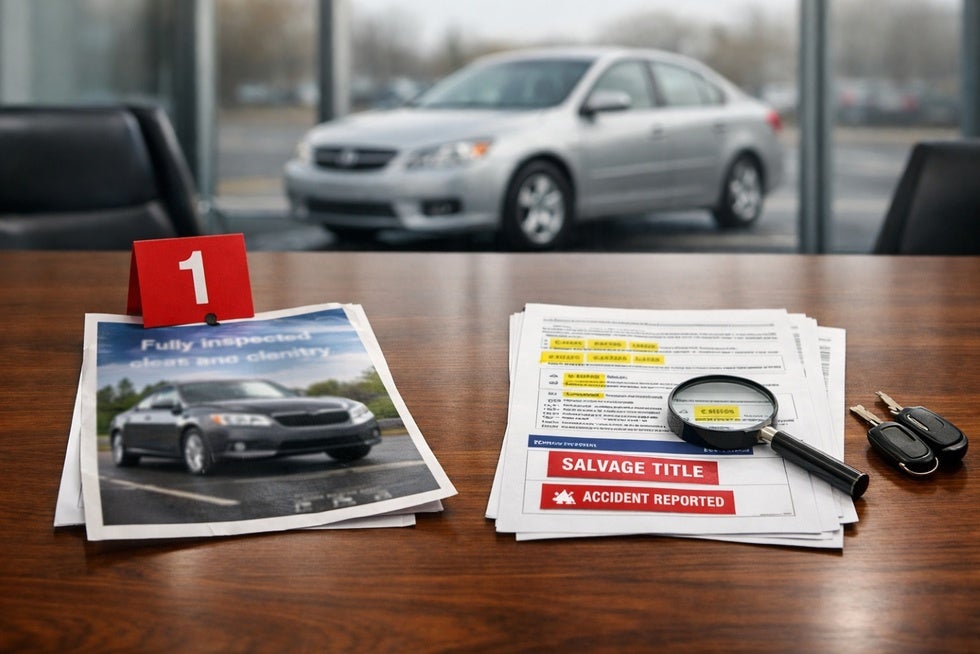
- Ad says “no issues / fully inspected” → major defect appears right away, diagnosis suggests it existed at sale
- Dealer says “no warning lights” → warning lights/codes reappear almost immediately (especially if you have evidence they were cleared)
- Dealer says “clean history” → you later find salvage/accident indicators or title branding
Case Reality Check (Free)
If you're dealing with a similar problem, start by summarizing the basics in the contact form. That lets us understand the situation before we speak (so the call isn't you starting from scratch).
Case Reality Check (Free): After we read what you submit, we'll email you, set a quick 10–15 minute call to ask a few qualifying questions → give you our straight take (strong, weak, or borderline) and the most sensible next step.
How to start:
In the contact form, tell us the vehicle, purchase date, what went wrong, and what you were told at the sale. We'll reach out by phone or email with an initial assessment, usually within 1–2 business days.
FAQ
I signed “as-is.” Is it still worth calling?
Sometimes, yes. “As-is” often limits warranty obligations, but it doesn't automatically defeat a claim based on misrepresentation or concealment. The question is whether there's a provable contradiction between what was represented and what the facts show.
What if the dealer says they never promised anything?
That's common. The best way around it is a record: the listing/ad, texts/emails, and objective repair/diagnostic findings. Verbal-only cases can be harder, but not always dead (especially if the ad and timeline do the heavy lifting).
The salesperson made big claims, but the contract says “entire agreement.” Does that kill it?
It can make the case harder if everything rests on oral statements. But it does not automatically erase written ads, written messages, or other proof showing the sale was driven by a deceptive claim.
Does the Buyers Guide matter?
It matters for warranty status. Dealers are generally required to display it, and it often shows “as is” or warranty coverage. But “as is” on that form doesn't automatically answer whether deception occurred.
What if the issue is really about surprise fees or add-ons?
That's a separate lane. We're covering that in the next post: “7 Dealer Fee Red Flags: Doc Fees, Prep Fees, Add-Ons That Don't Match Reality”.
What if the contract requires arbitration?
Arbitration can change the strategy and forum, but it doesn't automatically end a viable claim. We'll cover the practical realities in the arbitration post.
You may also like:
- Used Car Fraud & “As-Is” Dealer Misrepresentation
- Hidden Fees and Add-Ons in Used Car Deals: How to Spot the Mismatch
- Cleared Warning Lights and Masked Defects After a Used Car Sale
- Arbitration Clauses in Used Car Contracts: What Changes and What to Prepare
- Used Car Fraud Checklist: What to Do in the First 72 Hours

Comments
There are no comments for this post. Be the first and Add your Comment below.
Leave a Comment