
You find a problem after purchase, you push back, and the dealer points to the contract and says: “You have to arbitrate.” That can feel like a dead end. It usually is not. But arbitration changes how the dispute runs, what it costs, and how fast it moves.
This post explains arbitration in practical terms:
- What arbitration is and where the clause hides
- What changes operationally compared to court
- Realistic timelines
- What to prepare so the case is not just a verbal argument
If you want the full used car fraud overview, start with the pillar page. This post zooms in on arbitration.
What arbitration is in plain English
Arbitration is a private dispute process. Instead of a judge, a neutral arbitrator decides the outcome. The process often follows rules set by the contract and the arbitration forum.
Key point: arbitration is still a legal proceeding. It is just a different lane than court.
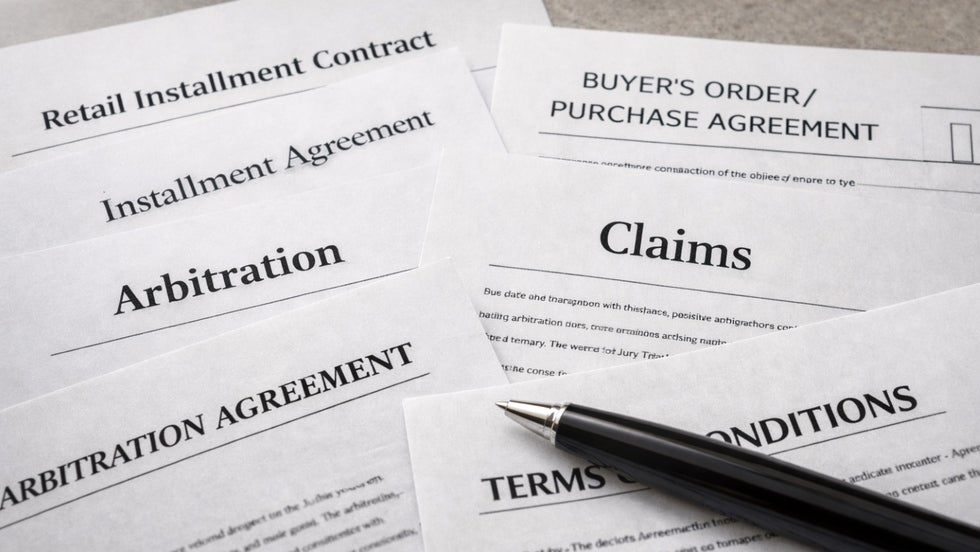
Where the arbitration clause usually hides
Look for it in:
- The retail installment contract if you financed
- The buyer's order or purchase agreement
- A separate arbitration agreement you signed at closing
- A packet of “terms and conditions” you were told is standard
Practical tip: the clause often has headings like “Arbitration,” “Dispute Resolution,” “Claims,” or “Waiver of Jury Trial.”
What arbitration changes operationally
Here is the real difference: arbitration is usually more streamlined. That can be good or bad depending on the facts.
Arbitration vs court at a glance
|
Topic |
Arbitration |
Court |
|
Decision maker |
Arbitrator |
Judge or jury |
|
Scheduling |
Often set by the arbitrator and forum |
Court calendar and rules |
|
Discovery and evidence exchange |
Often narrower |
Often broader |
|
Motions and delays |
Can be limited, but varies |
Can be extensive |
|
Privacy |
Often private |
Usually public |
|
Appeal options |
Usually limited |
Usually more structured |
The contract language matters. Some clauses are balanced. Some are tilted. The goal is to understand which you have.
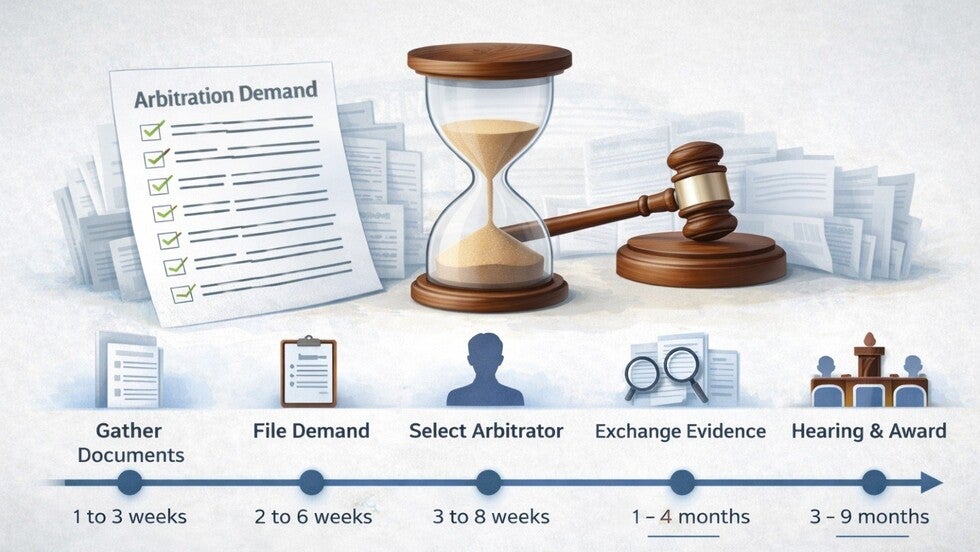
Realistic timelines: what “faster” often means
Some arbitration matters move faster than court. Some do not. It depends on the clause, the forum, and how much evidence needs review.
A common timeline looks like this:
|
Stage |
What happens |
Common range |
|
Early review |
Confirm clause, identify forum, gather core documents |
1 to 3 weeks |
|
Demand and filing |
Arbitration demand is prepared and filed |
2 to 6 weeks |
|
Arbitrator selection |
Forum appoints or parties select an arbitrator |
3 to 8 weeks |
|
Evidence exchange |
Documents exchanged, limited discovery if allowed |
1 to 4 months |
|
Hearing or decision on papers |
Hearing scheduled or submissions reviewed |
3 to 9 months |
|
Award issued |
Arbitrator issues a written decision |
2 to 8 weeks after hearing |
These are general ranges. The facts and the forum can shift them.
What to prepare if arbitration is on the table
Arbitration rewards clean organization. The side with a simple, documented story usually performs better than the side with emotion and no record.
Start with these items:
- The full contract set, including any arbitration pages
- The listing or ad screenshots
- Any written communications with the dealer, including texts and emails
- A simple timeline with purchase date, first symptoms, dealer contact dates, and repair dates
- Repair orders, diagnostics, and inspection notes
- A fee and add on breakdown if price changed in the office
- Financing terms and a copy of the retail installment contract if applicable
Then add arbitration specific details:
- The forum named in the clause, if one is listed
- Any notice requirements or “cure period” language
- Any opt out language and whether it was still available at the time of sale
Missing documents are common. Start with what you have.
What not to do if arbitration is mentioned
These mistakes can reduce leverage:
- Let everything stay verbal
· Ask for the dealer's position in writing
· Keep your own timeline notes
- Sign new paperwork to “fix it” without clarity
· If a dealer offers new forms, get a copy and slow down
- Delay for months after the defect appears
· Delays blur the timeline and make documentation harder
Case Reality Check (Free)
If you are dealing with a similar situation, start by summarizing the basics in the contact form. That lets us understand the situation before we speak, so the call is focused.
Case Reality Check (Free): After we read what you submit, we will email you, set a quick 10 to 15 minute call to ask a few qualifying questions, give you our straight take, strong, weak, or borderline, and explain the most sensible next step.
How to start:
In the contact form, tell us the vehicle, purchase date, what went wrong, what the dealer is saying, and what you were told at the time of sale. We will reach out by phone or email with an initial assessment, usually within 1 to 2 business days.
FAQ
What is an arbitration clause in a used car contract?
It is a contract term that may require disputes to be handled in private arbitration instead of court. The exact rules depend on the language in your contract and the forum named in the clause.
Does arbitration mean I cannot bring a claim?
Not automatically. Arbitration usually changes the forum and procedure. The key questions are whether your facts support a claim and whether the economics make sense after costs.
Is arbitration always faster than court?
Not always. Some matters move faster because scheduling is more flexible. Others take time due to arbitrator availability, forum timelines, and document review needs.
What should I gather if the dealer says I must arbitrate?
Start with the full contract set including any arbitration pages, the ad or listing screenshots, texts and emails, a simple timeline, and early repair diagnostics. Arbitration tends to reward organized, documented facts.
Will arbitration be private?
Often yes, compared to court filings which are usually public. The level of privacy can vary by forum and contract terms.
Do you take every arbitration case?
No. We focus on matters where the facts and the economics support a realistic recovery. If it is not economically sensible, we will tell you early.
You may also like:
- Used Car Fraud & “As-Is” Dealer Misrepresentation
- Does “As-Is” Mean You’re Stuck? What It Does and Doesn’t Mean in Used Car Sales
- Hidden Fees and Add-Ons in Used Car Deals: How to Spot the Mismatch
- Cleared Warning Lights and Masked Defects After a Used Car Sale
- Used Car Fraud Checklist: What to Do in the First 72 Hours

Comments
There are no comments for this post. Be the first and Add your Comment below.
Leave a Comment