
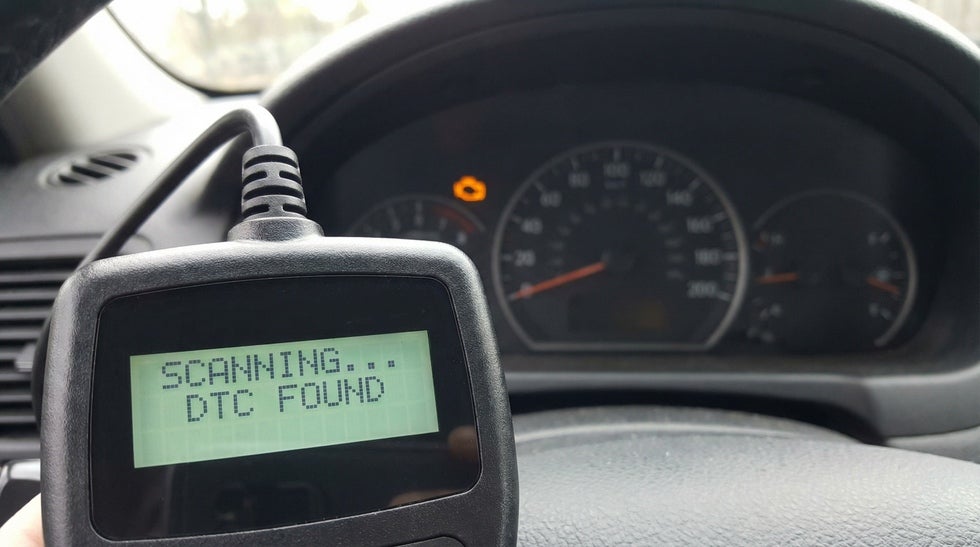
You test drove the car. No warning lights. The dealer said it was inspected. Then a few days later the check engine light comes on, the car starts misfiring, or it overheats.
Sometimes that is normal used car risk. Sometimes it is a defect that was masked just long enough to close the sale.
This post covers what that masking often looks like in real life, and how to document the problem so it is not just your word against theirs.
What it means when a warning light is “cleared”
Most modern cars store diagnostic trouble codes when the computer detects a fault. Those codes can be read with a scan tool.
They can also be cleared quickly.
Clearing codes does not necessarily fix the underlying issue. It often just resets the system so the light stays off until the vehicle completes enough normal driving for the fault to show again.
That is why a car can look clean on a short test drive and then light up soon after purchase.
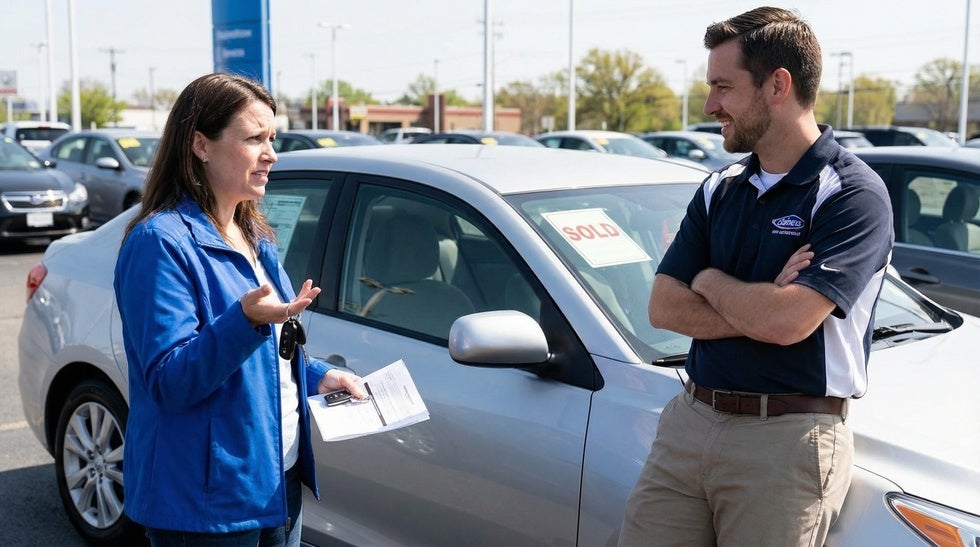
Why timing matters more than most people realize
From a proof standpoint, timing is often the difference between:
- An issue that likely existed at the time of sale
- An issue that might have happened later, with no clean way to tell why
If a serious issue shows up immediately or predictably soon after purchase, that timeline becomes important context, especially when the sales pitch was confident and specific.
Two terms that explain a lot: readiness monitors and drive cycles
After codes are cleared, the car has to run self tests again. Those are often called readiness monitors. The vehicle usually needs normal driving in different conditions to complete them. That is commonly called a drive cycle.
Practical takeaway:
- A quick test drive does not prove the car is clean
- A warning light that returns soon after purchase can support the idea that the issue was already there

Common masking patterns buyers report
Not every quick fix is deception. Sometimes someone tried to repair something and it did not hold. But these patterns show up often:
- Codes cleared shortly before the sale
- Temporary additives or sealants used to quiet symptoms for a short window
- Vehicle warmed up before you arrive so cold start problems do not show
- Quick sensor swap without addressing the real cause
- Battery disconnect used to reset warnings and some stored data
You do not need to accuse anyone on day one. You just want the facts documented early.
What to watch for and what to capture
|
What you see |
What it can mean |
What to capture |
|
Check engine light returns within days
|
Issue may have been present but temporarily hidden |
Date, mileage, and any scan results |
|
Multiple codes appear at once
|
System reset recently or a broader underlying problem |
Photo of code screen and shop printout if available |
|
Pending codes show up before the light stays on
|
Problem is being detected but not fully confirmed yet |
Scan record showing pending status and mileage |
|
Symptoms come and go |
Harder to prove without a tight timeline |
Short written timeline with dates and conditions |
|
Dealer says nothing is wrong but the light returns
|
Problem may be intermittent or recently reset |
Every dealer contact date and what they said |
What documentation tends to matter most
If you suspect codes were cleared or a defect was masked, focus on building a clean record early.
1. Code readout tied to date and mileage
- A shop printout is ideal
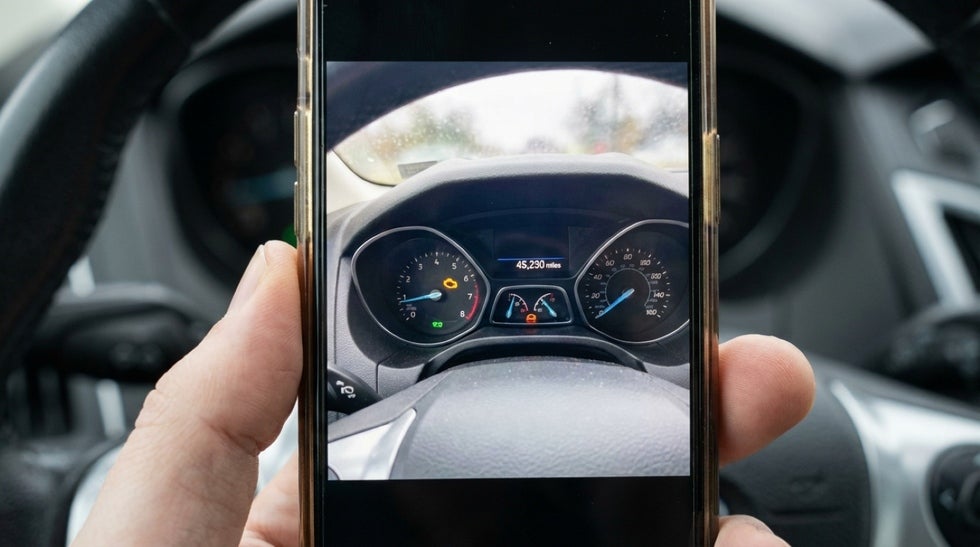
- A clear photo of a scan screen can still help
- Write down the mileage the day the light returned
2. Repair shop diagnostic note with findings
A useful diagnostic record includes:
- codes found
- tests performed
- technician observations
- likely cause, if they can identify it
You are not asking the shop for legal conclusions. You are asking them to document what they saw.
3. A simple timeline
Keep it short and factual:
- purchase date and mileage
- when symptoms started
- when the warning light returned
- what the dealer said when you reported it
- what the shop found and when
4. Written communication with the dealer
Try to keep the conversation in writing. If the dealer calls, follow up with a short email that confirms what was said.
What not to do if you want to preserve proof
- Do not clear codes yourself to see if it comes back
- Do not keep driving the vehicle if it feels unsafe
- Do not let the entire dispute stay verbal
- Do not sign new paperwork without understanding what it changes

What to request from the dealer without escalating
Keep requests short and specific:
- Please provide any inspection or reconditioning checklist used for this vehicle.
- Please provide repair orders for any work performed before the sale.
- Please confirm in writing whether you will repair, unwind, or deny.
Even a denial is useful if it is documented.
Case Reality Check (Free)
If you are dealing with a similar problem, start by summarizing the basics in the contact form. That lets us understand the situation before we speak, so the call is focused.
Case Reality Check (Free): After we read what you submit, we will email you, set a quick 10 to 15 minute call to ask a few qualifying questions, give you our straight take, strong, weak, or borderline, and explain the most sensible next step.
How to start:
In the contact form, tell us the vehicle, purchase date, what happened and when, any warning lights or codes you saw, and what you were told at the sale. We will reach out by phone or email with an initial assessment, usually within 1 to 2 business days.
FAQ
Does a cleared warning light prove the dealer did something wrong?
Not by itself. Codes can be cleared for many reasons. What matters is the full story, the timeline, and whether the records support a contradiction between what was represented and what the vehicle showed shortly after the sale.
Should I buy my own OBD scanner?
A scanner can help you understand what is happening, but it is not a substitute for a shop diagnostic record. If the issue is serious, a written shop note early is usually more useful than screenshots alone.
What if the dealer says the light came on because of something I did?
This is why timing, mileage, and early diagnostics matter. A clean record keeps the conversation grounded in facts instead of opinions.
The car passed the test drive. Does that mean it was fine?
Not necessarily. Some problems are intermittent or only show after the system runs self tests again, especially after codes were cleared.
How quickly should I get it scanned after the light returns?
If the warning light returns or the vehicle feels unsafe, get it checked as soon as practical. Delays can make documentation harder and can blur the timeline.
What results are realistic in cases like this?
It depends on the facts, the proof, and the economics. The point of an early reality check is to get an honest read on whether the situation looks strong, weak, or borderline.
You may also like:
- Used Car Fraud & “As-Is” Dealer Misrepresentation
- Does “As-Is” Mean You’re Stuck? What It Does and Doesn’t Mean in Used Car Sales
- Hidden Fees and Add-Ons in Used Car Deals: How to Spot the Mismatch
- Arbitration Clauses in Used Car Contracts: What Changes and What to Prepare
- Used Car Fraud Checklist: What to Do in the First 72 Hours

Comments
There are no comments for this post. Be the first and Add your Comment below.
Leave a Comment