
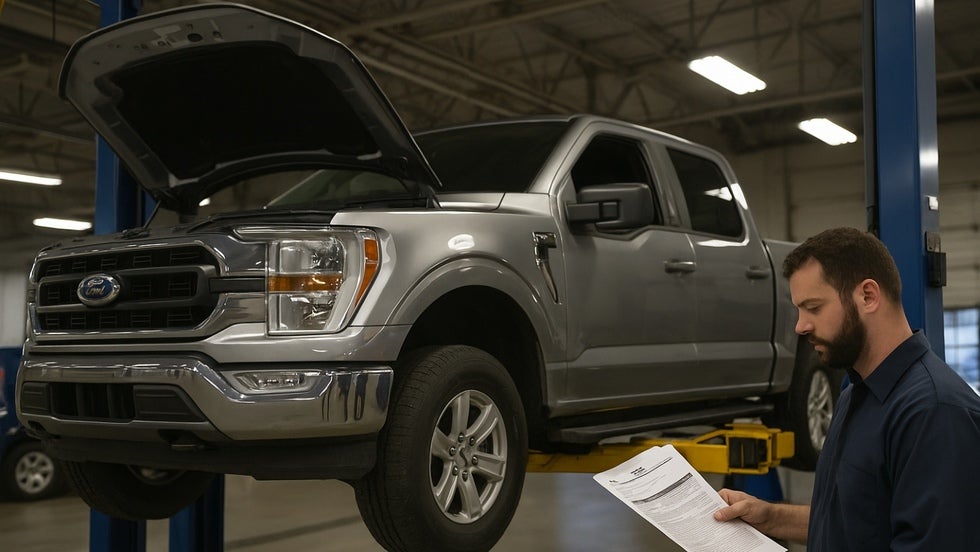
If your 2021-2025 Ford F-150 4x4 has a whining noise in the front end that disappears the moment you switch into 4H or 4A, you are not alone. Many owners are asking the same question: why is my Ford F-150 making a clicking noise, humming sound, or light grinding from the front?
Ford has issued Technical Service Bulletin (TSB) 24-2189, followed by an updated bulletin, to deal with a known problem in the Integrated Wheel End (IWE) system on these trucks. This article explains what the TSB covers, what your dealer is supposed to do, and what steps you can take if the noise returns after the repair.
What Problem Does TSB 24-2189 Address?
The bulletin applies to certain 2021-2025 Ford F-150 non-Raptor models with 4x4 and electronic shift-on-the-fly. Ford describes an issue where drivers notice:
- An intermittent grinding, humming, or rumbling noise from the front wheel area
- Noise that is present in 2WD
- Noise that goes away once 4WD is engaged
- No trouble codes stored in the transfer case control module
In everyday language, owners say that their Ford F-150 4x4 has whining noise in front end, or that they hear a light clicking or rumble-strip sensation at the front of the truck. When they ask the dealer what is the noise from an F-150 in 2WD, the IWE system is often the answer.
How the IWE System Creates Noise
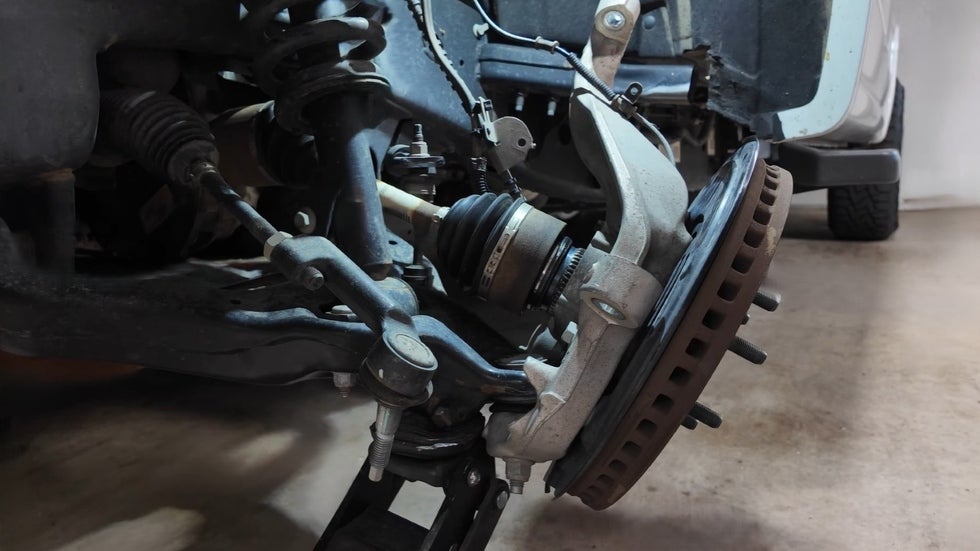
On these model years, the F-150 uses small electronically controlled hubs at each front wheel. These Integrated Wheel Ends disconnect the front wheels from the front axle in 2WD, then lock them in when you request 4WD.
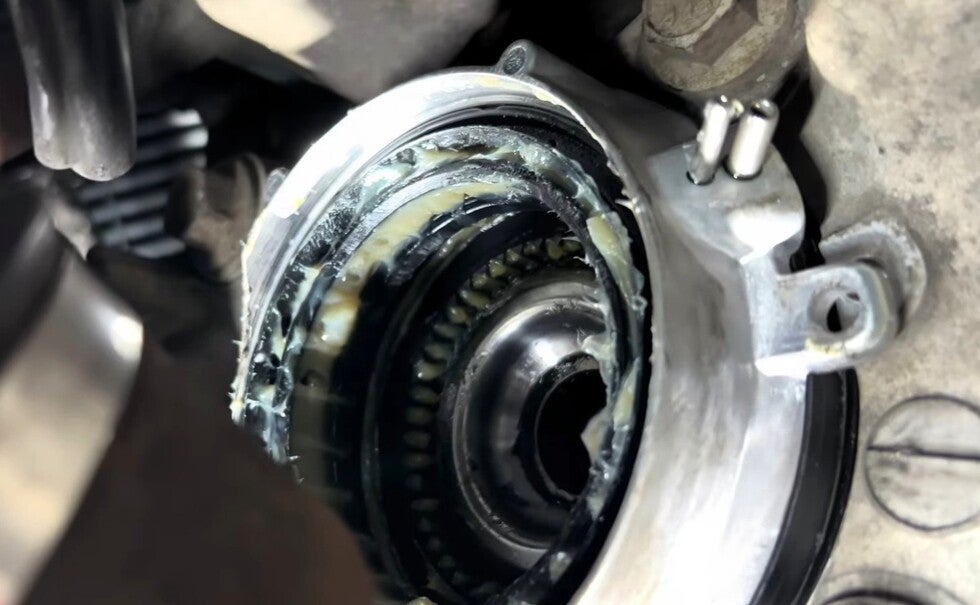
If an IWE does not fully disengage, the internal clutch teeth can chatter against the axle splines while the truck is moving. Drivers then hear humming, grinding, or clicking that rises and falls with road speed. As soon as they switch to 4H or 4A, the hub locks fully and the noise stops. That pattern is a classic sign of an IWE issue rather than a simple tire or wheel bearing problem.
What Does the TSB Tell the Dealer to Do?
TSB 24-2189 gives Ford dealers a detailed procedure. In simplified form, technicians should:
- Road test the truck and try to duplicate the front end noise, preferably from a cold start.
- Inspect the front axle splines and IWE components for abnormal wear or binding.
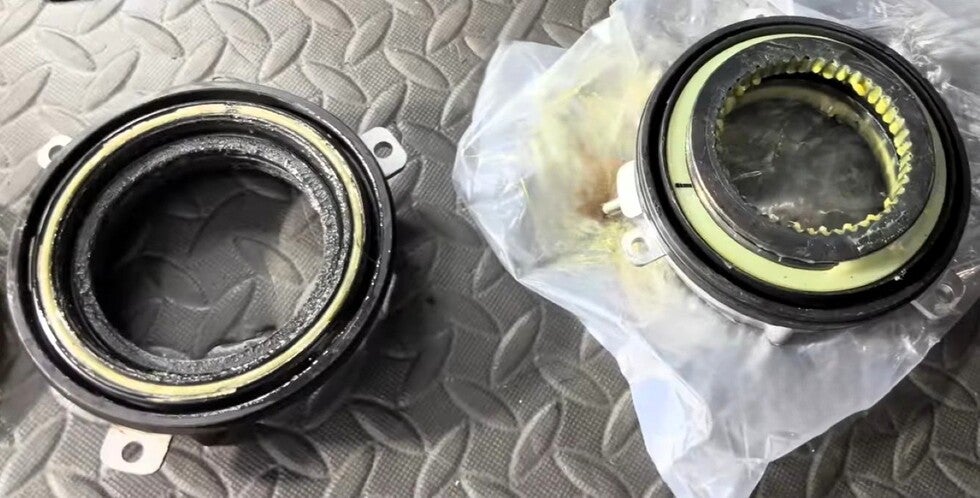
- Replace both front IWE actuator assemblies with updated parts that match the truck's model year.
- Clean and lubricate the splines and reinstall everything according to Ford's instructions.
Because this is a Technical Service Bulletin and not a recall, owners usually need to bring the truck in and describe the symptoms. If the vehicle is within the New Vehicle Limited Warranty and meets the criteria, the work should be covered as a warranty repair.
Why Might the Noise Come Back After the TSB Repair?
Some owners report that the front end noise is gone after the TSB work. Others find that the same humming or clicking returns weeks or months later, even though both IWEs were replaced.
There can be several reasons:
- The updated IWEs may still be sensitive to certain driving or temperature conditions.
- Related parts, such as hubs or axle splines, may already have wear that was not fully addressed.
- Installation or adjustment errors may leave one side slightly out of spec.
- The control strategy that commands the hubs may still allow partial engagement under some conditions.
The end result is that the truck once again feels and sounds wrong, and the owner is left wondering, why is my Ford F-150 making a clicking noise again after the TSB repair?
Practical Steps if Your F-150 Still Has IWE Noise
If your IWE related noise continues or returns, it is important to build a clear record:
1. Document the symptoms
- Record short videos with sound when the noise occurs.
- Note date, mileage, speed, temperature, and whether you were in 2WD or 4WD.
2. Return to the dealer for another repair order
- Explain that the truck already had TSB 24-2189 performed.
- Ask the advisor to list all prior IWE repairs on the new repair order.
- Request copies of every invoice and test drive note.
3. Keep everything together
- Maintain a folder with repair orders, videos, and any emails or texts with the dealer.
- This file is crucial if you later decide to pursue a lemon law or warranty claim.
When a TSB Is Not Enough: NY and NJ Lemon Law Options
A TSB is Ford's plan for fixing a known defect. That does not guarantee your individual truck will be repaired successfully. When a 2021-2025 Ford F-150 4x4 has ongoing front end noise, repeated IWE repairs, and extended time in the shop, owners in New York and New Jersey may have rights under state and federal law.
Lemon laws in both states focus on whether a defect substantially impairs the use, value, or safety of the vehicle and whether the manufacturer has had a reasonable number of chances to repair it. Persistent IWE noise and multiple unsuccessful repair attempts can be powerful evidence.
Owners with substantial and recurring problems may be entitled to a refund or replacement under the lemon law. Other owners may have claims for breach of warranty under the Magnuson-Moss Act.
The Law Office of Howard Gutman reviews Ford F-150 IWE and front end noise cases for owners in New York and New Jersey. If your dealer keeps saying that the truck is normal while the front still hums, clicks, or grinds, you can contact us for a free, no-obligation consultation about your options.
Sources:
- NHTSA – Ford TSB 24-2189 (Grinding/Hum/Rumble Noise From Front Wheel Area)
- NHTSA – 2023 Ford F-150 Recalls & Complaints
- F150Forum – “2023 F-150 w/ less than 200 miles – EIWE noise?”
- F150Gen14 Forum – Humming/Buzzing/Vibration Sound on a 2023 F-150
- F150Tremor Forum – Occasional Rumbling & IWE Discussion
You may also like:
- 2021–2024 Ford F-150 IWE Noise in Cold Weather
- Is Your 2021-2025 Ford F-150 a Lemon Because of IWE Grinding Noise?
- Ford Rearview Camera Recall (SYNC4): 1,075,000 Ford and Lincoln Vehicles Are Affected
- Ford Escape & Lincoln Corsair Battery Recall 2025: What Every Owner Needs to Know

Comments
There are no comments for this post. Be the first and Add your Comment below.
Leave a Comment