

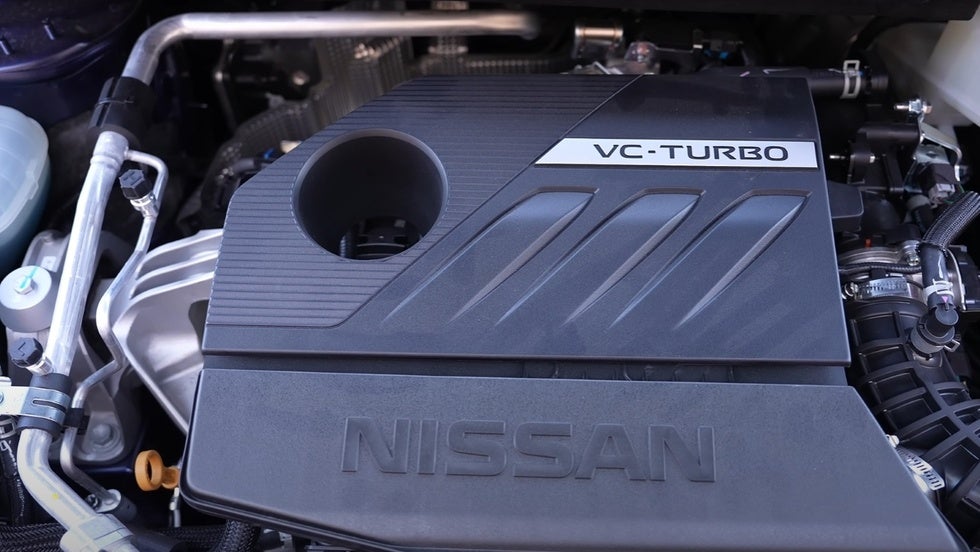
For thousands of Nissan and Infiniti owners across the United States, a highly touted piece of technology has turned into a nightmare. The Nissan class action lawsuit engine defect is making headlines, and for good reason: engines are failing, drivers are left stranded, and owners are learning that Nissan may have concealed problems with its Variable Compression Turbo (“VC-Turbo”) engines.
The Lawsuit Against Nissan
On July 8, 2025, a nationwide Nissan class action lawsuit was filed in federal court in Delaware: Dennis Becker et al. v. Nissan North America, Inc., Case No. 1:25-cv-00845. The plaintiffs include owners from Florida, New York, and Illinois who purchased or leased vehicles such as the Nissan Rogue, Nissan Altima, and Infiniti QX50. Each experienced catastrophic engine problems (some with vehicles that had only a few hundred miles on the odometer).
The grounds for the lawsuit against Nissan include breach of express and implied warranties, violations of the Magnuson-Moss Warranty Act, and violations of state consumer protection laws in New York, Florida, Missouri, and beyond. The complaint spans 96 pages and alleges that Nissan knew about serious defects in the VC-Turbo engine but concealed them from consumers.
What the Complaint Alleges
The lawsuit claims that internal components of the VC-Turbo engine (especially the main bearings and linkage parts) are defective. When they fail, engines produce knocking noises, lose power, stall, and in some cases, catch fire. Plaintiffs argue Nissan had evidence of this defect as early as 2019 through warranty data and internal testing but chose not to disclose it.
One striking fact: federal investigators at NHTSA documented 998 complaints and field reports and 1,107 warranty claims related to VC-Turbo engine failures before Nissan finally announced a recall. Even more alarming, at least 12 incidents of engine fires were reported.
Despite Nissan's eventual recall, the class action lawsuit argues that the “fix” (an oil change, an ECM software update, or in limited cases, an engine replacement) is inadequate. Plaintiffs say Nissan is still installing equally defective engines and that the recall does not compensate owners for towing, rental cars, or the loss of use of their vehicles.
Interesting Facts and Numbers
- 443,899 vehicles are included in the U.S. recall, covering the 2021–2024 Rogue, 2019–2020 Altima, 2019–2022 Infiniti QX50, and 2022 Infiniti QX55.
- Nissan admitted that only 1.2% of these vehicles might show metal debris requiring engine replacement, but warranty claims suggest the problem is much larger.
- One plaintiff's brand-new 2023 Rogue failed after just 157 miles on the road. Another owner's Infiniti QX50 required three separate engine replacements, yet the same failure kept recurring.
These numbers and stories paint a troubling picture for anyone who owns one of the affected vehicles.

How Owners Can Respond
If you own a Nissan or Infiniti with a VC-Turbo engine and have experienced repeated engine issues, you should know your rights. Owners with substantial and recurring problems may be entitled to a refund or replacement under lemon law. Other owners may have claims for breach of warranty under the Magnuson-Moss Act.
Our law office has decades of experience handling defective vehicle claims in New York and New Jersey. We understand how stressful it is to face repeated repairs, unexpected breakdowns, and safety concerns. You don't have to face this alone.
If you believe you may be affected by the Nissan Rogue class action lawsuit or the broader Nissan engine lawsuit, contact us today for a free consultation. We will review your case, explain your legal options, and fight to obtain the compensation you deserve.
Many cases are handled on contingency, meaning you pay nothing unless we recover money for you.*
Sources:
- ClassAction.org – Nissan Concealed Engine Defect Lawsuit
- CarComplaints – Nissan VC-Turbo Engine Problems Cause Recall
- CarComplaints – Nissan VC-Turbo Engine Warranty Extension
- CarComplaints – Nissan VC-Turbo Engine Class Action Lawsuit
You may also like:
- Nissan Turbo Engine Investigation
- Nissan Rogue and Infiniti Turbo Defect
- Nissan Engine Recall: Turbo Hose Recall 2025
* While we handle many claims on a contingency basis, no guarantee is made of a particular result. We evaluate each claim individually, and arrangements may vary – these will be set forth in a written agreement. We are happy to discuss our procedures and welcome any questions you may have.

Comments
There are no comments for this post. Be the first and Add your Comment below.
Leave a Comment